
We are particularly interested in Baumeister's painting materials: What paints, varnishes, and primers did he use? What were the properties of the new materials, why did he use them, and for which purposes were they particularly well suited?

Historical oil tube paints in the RED / LUKAS archive
© LUKAS.
Photo: Elia Schmid
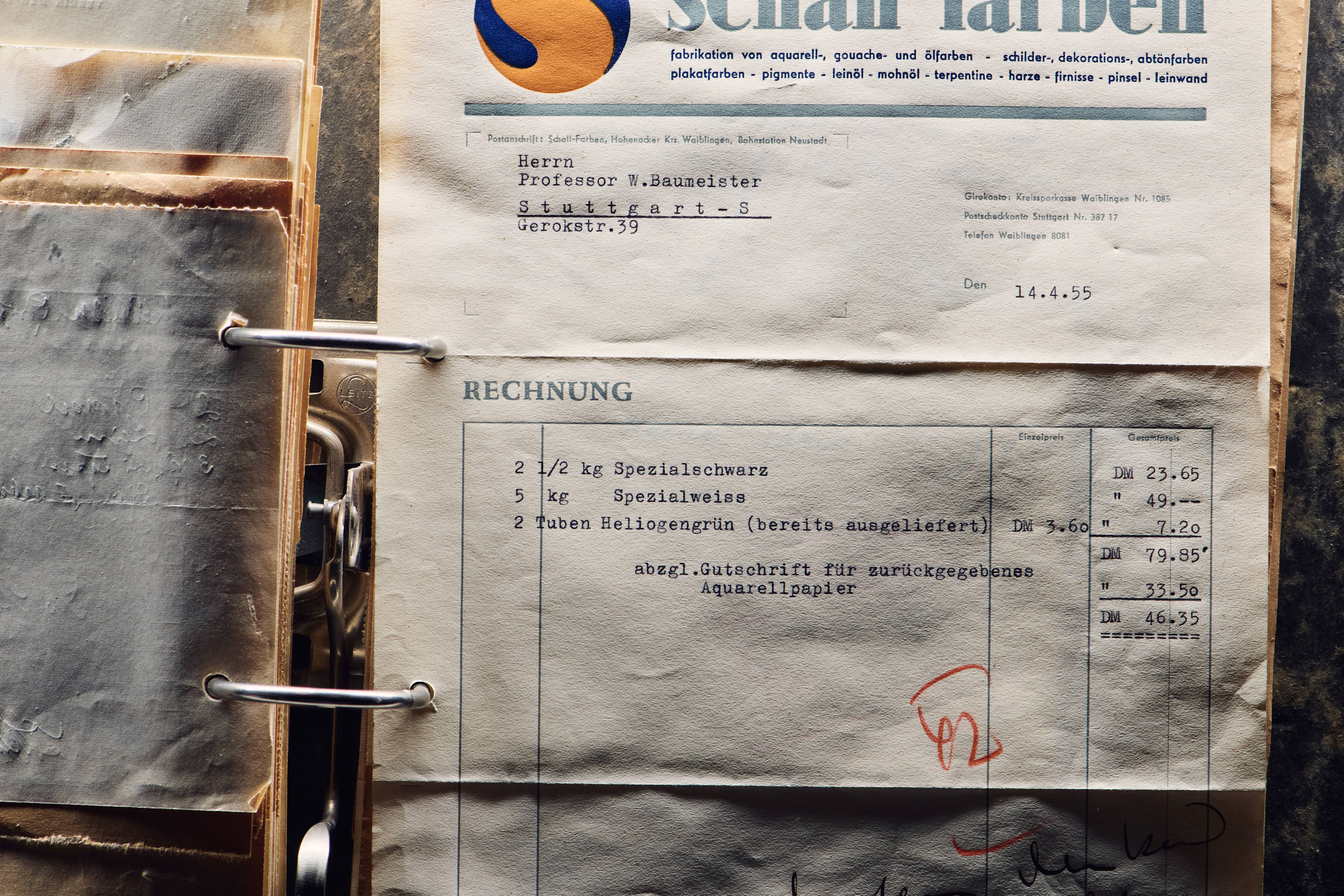
What lies behind product names such as "special white" (“Spezialweiß”) or "special black" (“Spezialschwarz”), and can we find them in his paintings?

Invoice from Schall Farben dated April 14, 1955, Archiv Baumeister at the Kunstmuseum Stuttgart.
Photo: Elia Schmid
We also want to find out whether his experiments with painting techniques at Kurt Herberts’ laboratory in Wuppertal were successful: Did the materials he tested there become established as new, innovative materials in his painting practice after the end of the war? Or were they just a temporary – and perhaps inferior – substitute for traditional materials, to be quickly abandoned after the war?
As conservators, we naturally also ask ourselves how we can best preserve Baumeister’s paintings: Do we perhaps need new ideas for this as well? Are they particularly fragile or sensitive to light? What must be considered when they are stored? How do the large amounts of plasticizers in Baumeister's paint layers affect their long-term preservation and possible conservation measures?

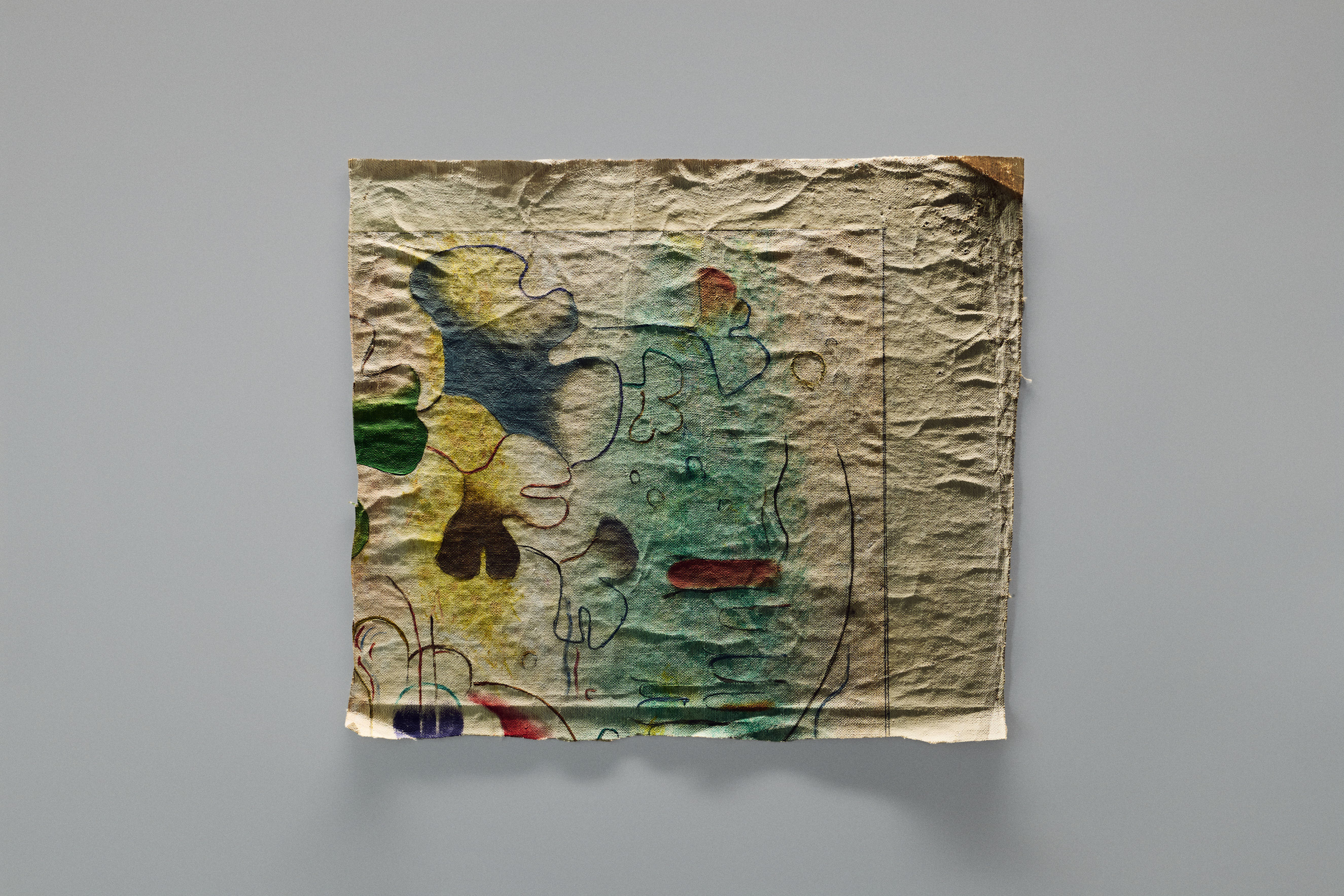
Willi Baumeister: Discarded painting with pronounced craquelure (fragment), circa 1938–42, 51.6 x 36.2 cm, Willi Baumeister Stiftung Stuttgart, Inv. No. V_014a.
Photo: Elia Schmid